Fissure Treatment in Sangvi PCMC - Seva Hospital

Fissure Treatment in Sangvi Pune

Expert Fissure Treatment Hospital in Sangvi Seva Hospital

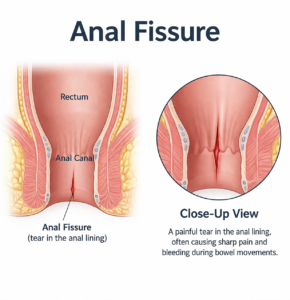
What is an Anal Fissure?

anal fissure

An anal fissure is essentially a small, linear tear or ulcer in the delicate, moist lining (called mucosa) of the anal canal. This is the very end part of the digestive system where stool passes through. Even though the tear itself is usually quite minor, it can lead to intense pain, bleeding, and significant discomfort, especially felt during and after a bowel movement.

Anal fissures are actually considered one of the most common problems affecting the anus and rectal area, and they can impact people of all ages, from infants right through to older adults.

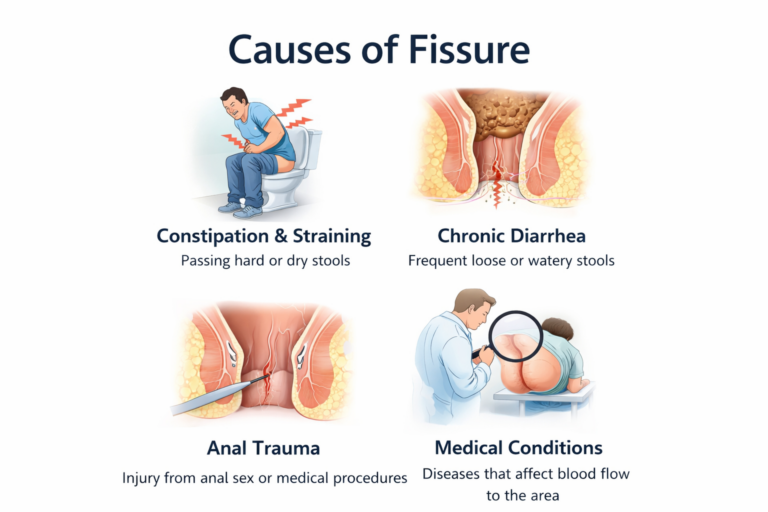
Causes of Anal Fissure

Fissure Treatment in Sangvi PCMC Seva Hospital
  • Constipation & Hard Stools – Stretch and tear the anal lining
  • Straining During Bowel Movements – Increases pressure and causes injury
  • Chronic Diarrhea – Irritates and inflames the anal area
  • Low-Fiber Diet & Poor Hydration – Lead to difficult bowel movements
  • Tight Anal Muscles – Reduce blood flow and delay healing

Symptoms and Warning Signs of Anal Fissure

Excruciating Pain

Excruciating Pain

Sharp, cutting sensations during Bowel Movements.

Fissure Treatment in Sangvi PCMC Seva Hospital

Post-Defecation Burning

Lingering discomfort that can last from several minutes to hours.

Visible Tear

Visible Tear

A linear crack in the Anal Canal skin.

Sentinel Pile

Sentinel Pile

A small, protective skin tag at the edge of a Chronic Fissure.

Types of Anal Fissures

Acute vs. Chronic Fissures

Acute Fissure

Acute Fissure

Usually heals within 6 weeks with conservative medical management, fiber-rich diets, and Sitz Baths.
Chronic Fissure

Chronic Fissure

Fissures lasting longer than 6 weeks with deep tears and visible muscle fibers. These require specialized intervention like Laser Sphincterotomy to prevent recurring infections and scarring.

Laser Surgery for Anal Fissure

Laser Surgery for Anal Fissure

Laser surgery is an advanced, minimally invasive treatment used to effectively manage chronic anal fissures that do not respond to medications or lifestyle changes. It is designed to provide faster healing, minimal pain, and long-term relief compared to conventional surgical methods.

An anal fissure often persists due to continuous spasm of the internal anal sphincter muscle, which reduces blood supply to the affected area and delays healing. Laser treatment directly addresses this underlying issue by reducing muscle tension and improving blood circulation, allowing the fissure to heal naturally.

How Laser Surgery Works

Fissure Treatment in Sangvi PCMC Seva Hospital

During the procedure, a specialized laser device is used to precisely target the affected area inside the anal canal. The laser energy is applied in a controlled manner to:

  • Relax the tight internal sphincter muscle
  • Reduce pressure within the anal canal
  • Improve blood flow to the fissure
  • Stimulate healing of the damaged tissue

Unlike traditional surgery, there are no large incisions or open wounds, making the procedure significantly more comfortable for the patient Fissure Treatment in Sangvi PCMC Seva Hospital.

Frequently Asked Questions About Fissure Treatment in Sangvi, PCMC

An anal fissure is a small tear in the lining of the anal canal. Common symptoms include sharp pain during bowel movements, burning sensation, and sometimes fresh blood on stool or tissue.

Laser treatment is minimally invasive and generally causes less pain compared to conventional surgery. Most patients experience quicker relief and faster recovery.

Recovery time varies. With proper treatment, many patients feel relief within a few days, while complete healing may take a couple of weeks depending on the condition.

Look for experienced proctologists or colorectal specialists with good patient reviews, advanced treatment options like laser surgery, and a strong local reputation.

Constipation and passing hard stool are the most common causes due to excessive strain on the anal lining.